
Plants
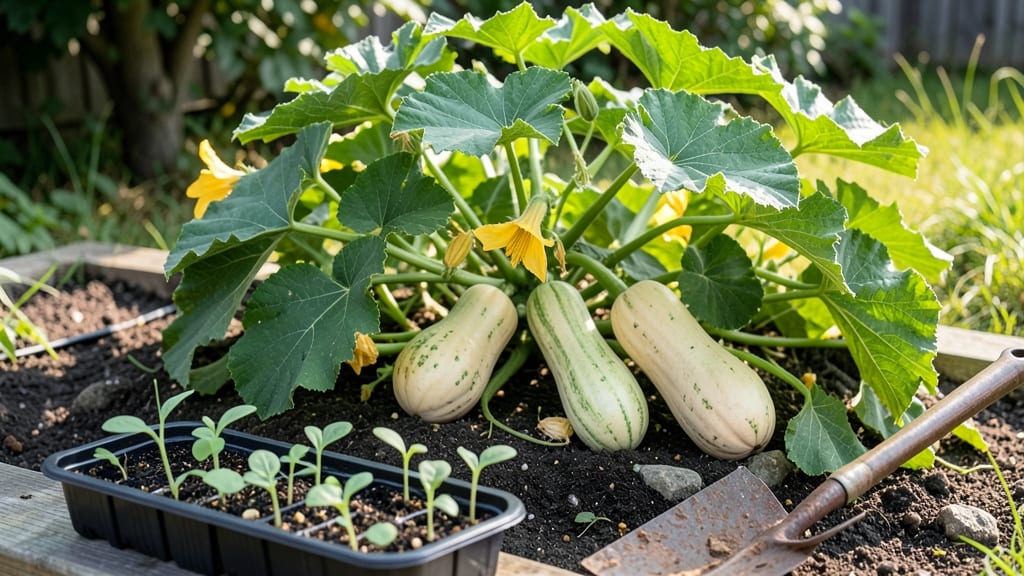
Planting butternut squash seeds in the UK means timing them right to avoid frost while maximizing your harvest window—mid-April to early June is your sweet spot for direct sowing.
Butternut squash 🎃 loves warmth, and planting too soon risks seedlings rotting in cold soil, while waiting too late cuts your harvest short. I’ve learned the hard way that a 15°C soil temperature is non-negotiable for germination, and regional frost dates can shift that window by weeks.
In the UK’s USDA zones 8-9, most gardeners aim for late May, but Scotland’s cooler climate may push you toward June. The key is checking your last frost date—plant too early, and you’ll lose weeks of growth; too late, and your squash won’t mature before autumn’s chill.
Below, I’ll break down the exact planting timeline by region, how to prep soil for faster germination, and the 3 signs your squash is ready to harvest—so you can avoid the common mistakes that leave you with half-sized fruit.
UK butternut squash planting timeline by region: frost dates & soil warmth
Timing your butternut squash seeds correctly in the UK means the difference between a bountiful harvest and wasted effort. Since the UK spans multiple climate zones, planting dates vary dramatically—from late April in southern England to mid-June in Scotland.
The key factors? Soil temperature (must reach 15°C+) and last frost dates, which can shift by weeks.
Butternut squash (Cucurbita moschata) loves warmth but hates cold snaps. In England’s warmer south, you can start sowing outdoors as early as mid-April, while Scotland’s cooler highlands may not be safe until late May or June.
Wales falls somewhere in between, with early May being the sweet spot for most areas. Always check your local frost risk maps—the Met Office provides excellent regional data.
Here’s the golden rule: Never plant until the soil is consistently above 15°C at a depth of 5cm. A soil thermometer is your best friend—if it’s cooler, wait.
Cold soil slows germination and invites damping-off disease. For extra safety, use black plastic mulch to warm the soil faster, especially in Scotland and northern England.
🌱
If you’re unsure about your local frost dates, I recommend using the Royal Horticultural Society (RHS) planting calendar or the Met Office’s frost risk tool. These resources account for microclimates—like urban heat islands or coastal influences—that can shift planting windows by 1-2 weeks.
For example, London’s city center often warms up faster than rural Kent, even though they’re geographically close.
For gardeners in Scotland and Northern Ireland, where summers are shorter, I suggest starting seeds indoors in March under grow lights. Transplant seedlings outdoors only after the last frost date and when nighttime temperatures stay above 10°C.
In England and Wales, you can often sow directly outdoors, but always harden off seedlings for 7-10 days before transplanting to
How to extend the UK growing season for butternut squash: 5 proven methods
Butternut squash needs at least 100 days of warm weather to mature, making the UK’s short growing season a challenge. By using season-extending techniques, you can push planting dates earlier or later, ensuring a bountiful harvest even in cooler climates.
These methods create microclimates that protect young plants from frost damage and cool soil, while also warming the ground faster.
Each technique has its own cost and effort level, so I’ll break down the pros and cons to help you choose what works best for your garden. Whether you’re a beginner or a seasoned grower, these methods can increase your harvest window by weeks or even months.
Let’s explore the top five ways to extend your butternut squash season in the UK.
5 Methods to Extend Your Butternut Squash Season
- Cold Frames: Start seeds 4-6 weeks earlier in a cold frame. Costs ~£50-£100 to build or buy. Ideal for early spring planting when soil is still cold.
- Cloches(Individual plant covers): Protect seedlings with clear plastic domes. Costs ~£10-£20 per cloche. Best for late spring or early autumn planting.
- Row Covers: Use floating fabric covers over rows. Costs ~£20-£50 for a 3m x 50m roll. Extends season by 2-4 weeks at both ends.
- Black Plastic Mulch: Warms soil 5-10°C faster than bare earth. Costs ~£10-£20 per roll. Perfect for early spring planting in cooler regions.
- Succession Planting: Stagger plantings every 2-3 weeks for continuous harvests. Costs minimal (just extra seeds). Works best with fast-maturing varieties like 'Waltham Butternut'.
Cold frames are one of the most effective ways to start seeds early because they trap heat from the sun while allowing light to penetrate.
I’ve used a simple wooden frame covered with clear polycarbonate panels to begin sowing butternut squash seeds in late March, even when outdoor temperatures hover around 5°C. The key is to place the frame on south-facing soil to maximize warmth absorption.
Cloches, on the other hand, are perfect for protecting individual plants rather than entire rows. These bell-shaped covers fit over seedlings and create a mini greenhouse effect. I’ve found that cloches work exceptionally well for late spring plantings when nights are still chilly.
Simply remove the cloche during the day to harden off plants and replace it at night until temperatures stabilize.
Row covers, often made from floating fabric, are a budget-friendly option for extending the season at both ends. These lightweight covers allow light and water to pass through while trapping warmth.
I’ve used them to plant butternut squash in early May and continue growing into late September, adding an extra 4-6 weeks to the growing season. Just remember to secure the edges with bricks or soil to prevent wind damage.
Black plastic mulch is a game-changer for warming soil quickly. By covering the planting area a few weeks before sowing, you can raise soil temperatures by 5-10°C, allowing you to plant 2-3 weeks earlier than usual.
This method is particularly useful in cooler regions like Scotland, where soil warmth is often the limiting factor. I’ve seen it make the difference between a failed crop and a thriving one in my own garden.
Finally, succession planting ensures you’re always harvesting fresh butternut squash. By sowing seeds every 2-3 weeks from mid-April to early June, you can stagger your harvest from late August through October.
This method works best with fast-maturing varieties like 'Long Island Cheese,' which can be ready in as few as 80 days. It’s a low-cost way to maximize your yield without relying on expensive equipment.