
Plants
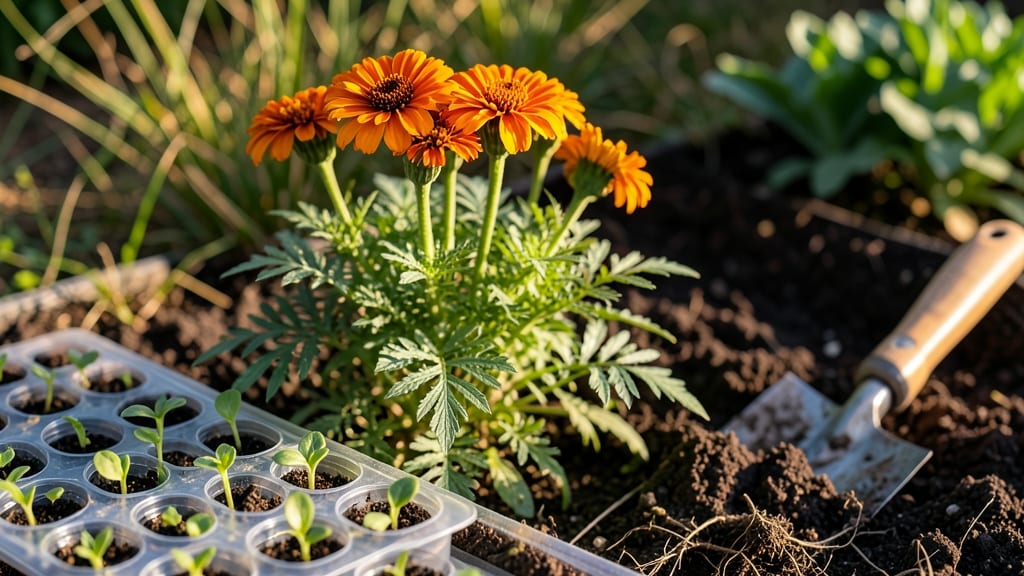
Plant marigold seeds in Michigan when soil temperatures hit 60°F and the last frost has passed — typically mid-April to early June, or late August to early September for fall blooms.
Michigan gardeners know timing is everything — plant marigold seeds too early, and frost will kill them; too late, and summer heat arrives before they bloom. Mastering the perfect frost-free window ensures vibrant flowers all season long.
With Michigan’s USDA Zones 5b-6b, your planting window hinges on soil warmth and frost dates. Most regions can start seeds indoors in late March, but direct sowing waits until after April 15 to avoid cold snaps.
Below, I’ll break down the exact frost-free timeline for your area, the best marigold varieties for Michigan’s heat, and pro tips to extend blooms from spring through fall.
Michigan marigold planting timeline: frost dates & hardiness zones
Michigan’s USDA hardiness zones 5b-6b create a unique challenge for marigold growers—too early, and frost zaps tender seedlings; too late, and summer heat arrives before blooms appear. The key is planting when soil temperatures hit 60°F and the last frost date has passed.
For most of Michigan, this window opens in mid-April to early June, with a secondary fall window from late August to early September.
Your exact planting window depends on your county’s average last frost date. Northern Michigan (Zone 5b) typically waits until May 1-15, while southern regions (Zone 6b) can start as early as April 15.
Always check your local Michigan State University Extension frost maps for precision—these are more reliable than generic USDA averages.
Marigolds thrive in full sun (6+ hours daily) and well-draining soil with a pH between 6.0-7.5. Before planting, test your soil—amend with compost if it’s heavy clay or sandy. A simple soil thermometer ($10 at garden centers) will confirm when temperatures reach the 60°F minimum for germination.
Here’s your Michigan marigold planting timeline broken down by zone and season:
| Stage | Zone 5b (Northern MI) | Zone 6b (Southern MI) | Soil Temp | Action |
|---|---|---|---|---|
| Spring Planting Window | May 1-15 | April 15-May 1 | 60°F+ | Sow seeds 1/4" deep, 12-18" apart |
| Fall Planting Window | August 20-Sept 5 | August 25-Sept 10 | 60°F+ | Sow seeds for late blooms |
| Last Frost Date | May 1-15 | April 20-May 5 | N/A | Wait 2 weeks after last frost |
| First Frost Date | October 10-20 | October 5-15 | N/A | Harvest seeds before frost |
| Bloom Time | July-October | June-October | N/A | Deadhead for continuous blooms |
For northern Michigan gardeners, consider starting marigold seeds indoors 4-6 weeks before your last frost date (around March 15-30). Use seedling trays with well-draining potting mix and keep them under grow lights until soil warms outside. Transplant hardened-off seedlings after May 1 to avoid frost damage.
In southern Michigan, where springs arrive earlier, you can direct-sow seeds as soon as soil reaches 60°F (often by April 15). For extended blooms, make a second planting in late July—these will flower until the first frost in mid-October.
This two-phase approach ensures continuous color from June through October.
Pro tip: Use black plastic mulch to warm soil faster in cool springs. Lay it down 2-3 weeks before planting—this raises soil temperatures by 5-10°F, accelerating germination. Just remember to remove it after planting to prevent overheating.
Always monitor local weather forecasts in the weeks leading up to planting. A late frost in May or an early one in September can still sneak up. If frost threatens, cover young plants with frost cloth or old bedsheets secured with bricks.
Marigolds are heat-tolerant once established, but seedlings struggle in temperatures above 85°F. If your summer hits 90°F+ consistently, provide afternoon shade for young plants until they mature. Mulch with straw or wood chips to retain moisture and keep roots cool.
Best heat-tolerant marigold varieties for Michigan’s summer heat
Michigan’s summer heat can turn gardens into saunas, but the right marigold varieties thrive under these conditions. French marigolds, African marigolds, and Signet marigolds all handle heat differently—choose wisely for continuous blooms and pest control.
French marigolds, with their delicate petals, prefer partial shade in peak heat, while African marigolds stand tall in full sun, their golden-orange blooms repelling nematodes naturally.
For maximum heat tolerance, African marigolds like 'Jingle Bells' or 'Crackerjack' dominate with 24-inch stalks and drought-resistant foliage. Signet marigolds, like 'Tangerine', offer a compact 12-inch option perfect for container gardens or sunny borders.
Each variety brings unique pest-deterrent properties—African types repel squash bugs, while French marigolds attract beneficial insects like ladybugs.
🌼Pros-Cons Box:
- Heat-tolerant (thrives in 90°F+)
- Tallest variety (great for back of beds)
- Strong pest repellent (nematodes, squash bugs)
- Fragrant blooms (attracts pollinators)
- Compact size (ideal for containers)
- Longer bloom time (from late summer)
- Needs staking (tall stems may flop)
- Less drought-resistant than Signet types
- Fewer color options (mostly orange)
- Sensitive to heat (wilts in 90°F+)
- Shorter stature (not ideal for tall borders)
- Attracts aphids if overcrowded
If your garden faces intense afternoon sun, mix varieties for season-long color. Start with African marigolds in May for early blooms, then add French marigolds in June to extend the season.
Signet marigolds, like 'Bonanza', bridge the gap with heat-resistant foliage and buttery-yellow flowers that bloom until first frost.
For pest control, prioritize African marigolds near vegetable beds—their strong scent deters harmful insects while attracting beneficial wasps. French marigolds, planted near roses or lavender, create a fragrant border that repels Japanese beetles.
Always deadhead spent blooms to encourage continuous flowering throughout Michigan’s short growing season.
🌱Pro Tip: Mulch with straw or pine needles to retain moisture and regulate soil temperature. This simple step keeps roots cool during July heatwaves while suppressing weeds. Pair your marigolds with basil or thyme for a low-maintenance, pest-free garden combo that thrives in Michigan’s humid summers.
With the right heat-tolerant varieties and a few care adjustments, your marigolds will bloom nonstop from June to October, turning your garden into a sunny, fragrant oasis—even when Michigan’s heat is at its peak. 🌻