
Plants
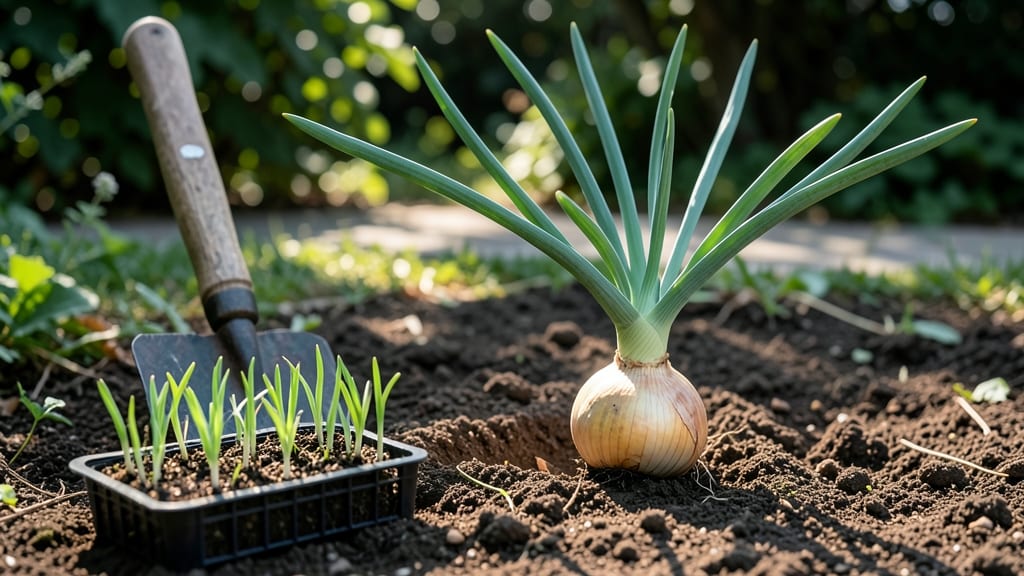
Plant onions in San Diego from October through March to avoid bolting and take full advantage of the region’s mild winters and long growing season.
San Diego’s frost-free climate means you can grow 🧅 almost year-round—but timing is everything. Plant too early, and you’ll risk bolting; too late, and pests or poor yields will steal your harvest. The key is leveraging the cooler months when temperatures stay steady, and the soil stays moist without overheating.
This guide breaks down the ideal planting windows for your specific microclimate, whether you’re coastal or inland, and shares the varieties that thrive in San Diego’s Mediterranean conditions. No more guesswork—just a foolproof plan for a continuous harvest.
You’ll learn how to stagger plantings for nonstop onions, avoid common mistakes, and even extend your season into April. Ready to grow onions like a local?
Best onion planting times in San Diego’s coastal microclimates
San Diego’s unique coastal microclimates create ideal conditions for growing onions year-round, but precise timing prevents bolting and maximizes bulb size. Unlike inland areas, coastal regions near the ocean enjoy cooler summers and warmer winters, while inland zones can experience sudden temperature swings.
Understanding these differences ensures your onions thrive whether you’re in La Jolla or El Cajon.
Onions prefer cool soil temperatures (50-65°F) and struggle when daytime temps exceed 80°F. In San Diego, this means planting sets or seeds during the fall and winter months when coastal areas stay mild and inland zones avoid extreme heat.
My personal rule of thumb is to start planting 4-6 weeks before the first cool snap, typically in late September to early November.
| Season | Coastal Zone (e.g., La Jolla, Encinitas) | Inland Zone (e.g., El Cajon, Ramona) | Key Considerations |
|---|---|---|---|
| Fall (Sep-Nov) | 🌱 Best time: Sep 15-Oct 15 🌡️ Soil temps: 60-70°F |
🌱 Best time: Oct 1-Nov 1 🌡️ Soil temps: 55-65°F |
✅ Ideal for sets/seeds 💧 Water deeply 2x/week |
| Winter (Dec-Feb) | 🌱 Second window: Dec 15-Jan 15 🌡️ Soil temps: 50-60°F |
🌱 Second window: Jan 1-Feb 1 🌡️ Soil temps: 45-55°F |
⚠️ Watch for sudden cold snaps 🌱 Use row covers if temps drop below 40°F |
| Spring (Mar-Apr) | 🌱 Limited success: Mar 15-Apr 1 🌡️ Soil temps: 65-75°F |
❌ Avoid after Mar 15 🌡️ Soil temps exceed 75°F |
⚠️ High bolting risk 🌱 Choose short-day varieties like 'Texas Early White' |
For coastal San Diego, fall planting (September-October) yields the largest bulbs because temperatures stay moderate, and humidity is lower than inland areas. I’ve found that onion sets (small bulbs) planted in late September produce harvest-ready onions by February-March.
If you prefer seeds, start them indoors in August and transplant in October for a late-winter harvest.
Inland zones like El Cajon or Ramona experience hotter summers and cooler winters, making October-November the only reliable window for planting. The key difference? Inland soil warms up faster in spring, causing onions to bolt prematurely.
To mitigate this, I recommend shade cloth (30-50%) during peak summer months if you attempt a spring planting.
One pro tip I’ve learned is to stagger plantings every 2-3 weeks from September to November. This ensures a continuous harvest instead of one big batch. For example, plant half your sets in late September, another quarter in early October, and the final quarter in mid-October.
This method works especially well for green onions, which can be harvested 30-40 days after planting.
San Diego’s frost-free zone (10a) means you don’t have to worry about winter kills, but temperature fluctuations can still stress onions. Coastal areas rarely drop below 40°F, while inland zones can see 30°F nights.
If you’re planting in December or January, use lightweight row covers to protect young seedlings from unexpected cold snaps. I’ve used frost blankets successfully in my San Marcos garden during unusually chilly spells.
When choosing onion varieties, opt for short-day onions like '1015Y Yellow' or 'Texas Early White', which thrive in San Diego’s 10-12 hour daylight. Long-day varieties (e.g., 'Sweet Spanish') may bolt prematurely unless planted in fall.
For green onions, 'Evergreen Hardy White' is my go-to because it tolerates partial shade and hotter conditions better than traditional bulbing onions.
Finally, soil preparation is critical. Onions need well-draining, slightly acidic soil (pH 6.0-7.0). Before planting, amend your soil with compost and aged manure to improve fertility. In coastal areas, I add a 1
How to stagger onion plantings for continuous harvests
San Diego’s frost-free climate is perfect for staggered onion plantings—a simple strategy to enjoy fresh harvests from fall through spring. Instead of planting all at once, I space out 3-4 planting cycles every 4-6 weeks, ensuring a steady supply of sweet, flavorful bulbs.
This method works for both onion sets and seeds, and it’s especially effective for short-day varieties like Texas Early White or long-day types like Yellow Sweet Spanish.
Key to success is understanding San Diego’s microclimates. Coastal areas like La Jolla stay milder year-round, while inland spots near Escondido can experience cooler nights in winter—both affect planting timing.
I recommend starting your first batch in late September when soil temps drop below 75°F, then follow up with October, November, and December plantings. This ensures each batch matures before summer heat triggers bolting (flowering) or poor bulb formation.
Here’s my proven 4-step succession plan for San Diego gardens, including soil prep and variety selection to maximize yields:
- 📅 Step 1: Soil Prep – Test soil pH (aim for 6.0-7.0) and amend with compost or aged manure. San Diego’s sandy soils drain too fast; mix in 2-3 inches of organic matter to retain moisture. Avoid fresh manure—it can cause bolting from excess nitrogen.
- 🌱 Step 2: Variety Selection – Plant short-day onions (e.g., Texas Early White) for fall/winter harvests and long-day types (e.g., Yellow Sweet Spanish) for spring harvests. Coastal areas can grow long-day onions year-round, but inland gardens may need shorter-day varieties to prevent bolting.
- ⏳ Step 3: Planting Timeline –
- Cycle 1: Late September – Early October (harvest March-April)
- Cycle 2: Mid-October – Early November (harvest April-May)
- Cycle 3: Mid-November – Early December (harvest May-June)
- Cycle 4 (optional): January (harvest June-July)
- 💧 Step 4: Care & Harvest – Water deeply 1-2 times per week (more in summer). Stop watering 2 weeks before harvest to sweeten bulbs. Harvest when tops yellow and fall over or bulbs reach 1-2 inches in diameter. Cure in a shady, dry place for 1-2 weeks before storing.
For coastal San Diego gardens, you can even squeeze in a fifth planting in late August for an early fall harvest. Just monitor soil temps—if they stay above 80°F, onions will bolt. Inland areas should avoid summer plantings entirely and focus on fall through winter cycles.
I’ve found that mulching with straw after planting helps regulate soil temps and retains moisture, which is critical during San Diego’s dry winters.
One common mistake I see is planting all onions at once and expecting a long harvest. Without succession, you’ll end up with a glut of onions all maturing simultaneously. Staggering plantings also reduces pest pressure—onion flies and thrips don’t overwhelm your entire crop at once.
Plus, it’s a great way to experiment with varieties—try a mix of red, white, and yellow onions for color and flavor diversity in your kitchen.
Pro tip: Keep a gardening journal to track which varieties perform best in your microclimate. For example, I’ve had Texas Early White bolt in inland Escondido during hot springs, while it thrived in coastal Encinitas.
By adjusting your planting schedule based on local weather patterns, you’ll fine-tune your succession plan each year for bigger, sweeter onions with minimal waste.