
Plants
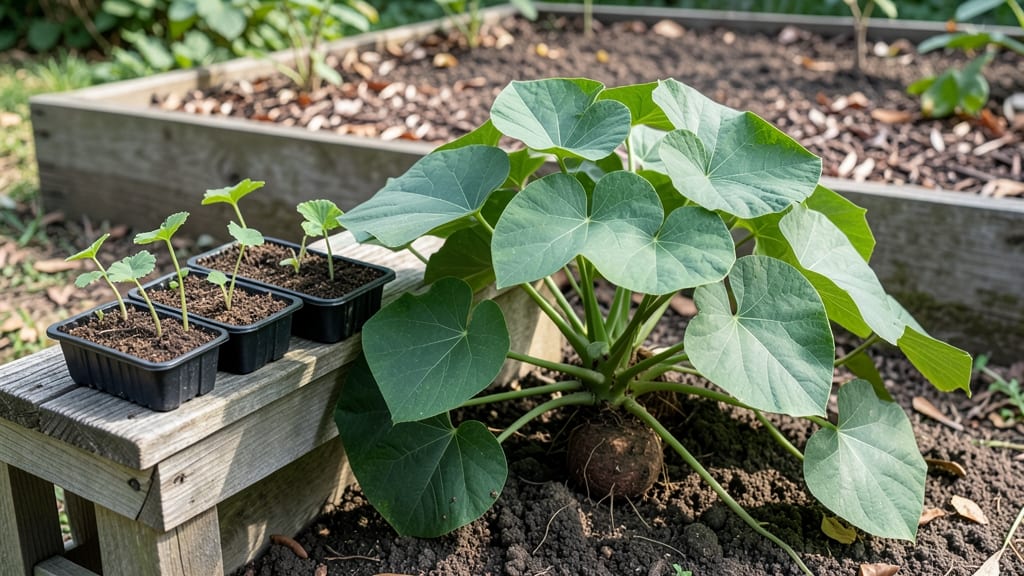
Plant sweet potatoes in Michigan after your last frost, when soil temperatures hit 65°F—typically late May to early June for 5b-6b zones.
Michigan’s short growing season makes timing critical for sweet potato success—plant too early, and frost will kill them; too late, and you’ll miss the harvest window. But with the right strategy, you can grow sweet potatoes in Michigan’s climate—whether you’re using slips or transplants.
If you’ve ever struggled with uneven soil warmth or late frosts, you know how tricky this can be. The key? Monitoring soil temps, choosing the right planting method, and using mulch to extend the season.
Below, I break down the exact planting windows for slips vs. transplants, how to prep your soil, and pro tips to protect your crop from Michigan’s early frosts.
Michigan sweet potato planting timeline: slips vs. transplants compared
Sweet potatoes thrive in Michigan’s climate when planted at the right time—late May to early June—but the method (slips vs. transplants) changes your timeline. Slips (young plants) give you a head start, while transplants require warmer soil.
Let’s break down the best windows for each, including regional differences between Upper and Lower Michigan.
In Lower Michigan (USDA zones 5b-6a), where springs warm faster, you can plant slips by late May and transplants by early June. In Upper Michigan (zones 4b-5a), wait until early June for slips and mid-June for transplants—soil needs to hit 65°F consistently.
Always check your local last frost date (typically mid-April to early May) and add 2-3 weeks for safety.
Here’s how soil temperature and frost risk shape your choices:
Purchased slips (from nurseries) are ready to plant 2–3 weeks earlier than homegrown slips because they’ve already sprouted. If you’re starting slips indoors, begin 4–6 weeks before your target outdoor date (e.g., mid-April for Lower MI, early May for Upper MI). For transplants, buy 4-inch pots and harden them off for 7–10 days before planting.
Black plastic mulch is a game-changer in Michigan—it warms soil 10–15°F faster, letting you plant 1–2 weeks earlier. Lay it down 2 weeks before planting to maximize heat retention. Pair this with row covers in early summer to protect young plants from unexpected late frosts (common in Upper Michigan).
If you miss the ideal window, don’t panic. Succession planting works for slips: plant every 2 weeks until mid-July for staggered harvests. Transplants, however, should never be planted after mid-July—they won’t mature before frost.
Always prioritize soil warmth over calendar dates; a soil thermometer ($10 at garden centers) is worth the investment.
Pro tip: In Upper Michigan, aim for slips by June 1st—any later, and your harvest may shrink due to shorter daylight. Use early-maturing varieties like ‘Beauregard’ (90 days) or ‘Georgia Jet’ (95 days) to hedge against early frosts. Lower Michigan growers can afford slightly later plantings with longer-season varieties like ‘Centennial’ (110–120 days).
Remember: Sweet potatoes need 90–120 days to mature, so plan backward from your first frost date (usually mid-October). If your math shows a tight window, extend the season with row covers or cold frames—but avoid planting after August 1st in Upper Michigan or July 15th in Lower Michigan.
🍠
5 Critical factors that determine your Michigan sweet potato planting schedule
Sweet potatoes thrive in warm soil, but Michigan’s cool springs and unpredictable frost dates demand precision. The difference between a failed harvest and a bountiful yield often comes down to these 5 critical factors.
Ignore them, and you risk stunted growth, rotting tubers, or frost damage. Let’s break down what truly matters for your planting schedule.
First, the last frost date sets your baseline. In Michigan, this typically falls between mid-April and early May, but it varies by region—Southern Michigan warms faster than Northern Michigan. Planting too soon means frost will kill your slips, while waiting too long cuts your harvest window short.
Use the USDA Plant Hardiness Zone Map (zones 5b-6b) as your guide, but always verify local frost data.
-
1. Last Frost Date (2024 Averages)
Southern MI: May 1-15 | Northern MI: May 15-30 -
2. Soil Temperature
Must reach 65°F+ at 6 inches deep (use a soil thermometer) -
3. Transplant Hardiness
Slips survive 50°F+ nights; avoid planting before May 15 in most areas -
4. Frost-Free Growing Window
Michigan’s 165-day window limits late plantings; aim for June 1 latest -
5. Adjust for Early/Late Seasons
Use black plastic mulch to warm soil 2-3 weeks earlier or extend season with row covers
Soil warmth is non-negotiable for sweet potatoes. They won’t sprout until the soil hits 65°F at 6 inches deep. Test your soil with a soil thermometer—if it’s cooler, delay planting or use black plastic mulch to accelerate warming.
Pro tip: Lay mulch 2 weeks before planting to jumpstart the process. Without warm soil, your slips will rot in the ground.
Transplant hardiness often gets overlooked, but it’s a game-changer. Sweet potato slips can handle 50°F nighttime temperatures, but they’ll struggle below that. If you’re in Northern Michigan, wait until May 15 or later to avoid stunted growth.
For Southern Michigan, you might squeeze in an earlier planting, but always confirm with a frost forecast—a late freeze can wipe out weeks of progress.
Michigan’s 165-day frost-free window is another hard limit. Sweet potatoes need 90-120 days to mature, so planting after June 1 risks an early frost cutting your harvest short.
If you’re pushing the envelope, opt for early-maturing varieties like ‘Beauregard’ (90 days) or ‘Georgia Jet’ (95 days). For late plantings, use row covers to buy extra time.
Finally, adjust for your specific season. If spring is warmer than average, plant early; if it’s cooler, delay or use mulch. Track local microclimates—a south-facing bed warms faster than a shaded spot.
By aligning these 5 factors, you’ll maximize your chances of a successful harvest despite Michigan’s unpredictable weather.