
Plants
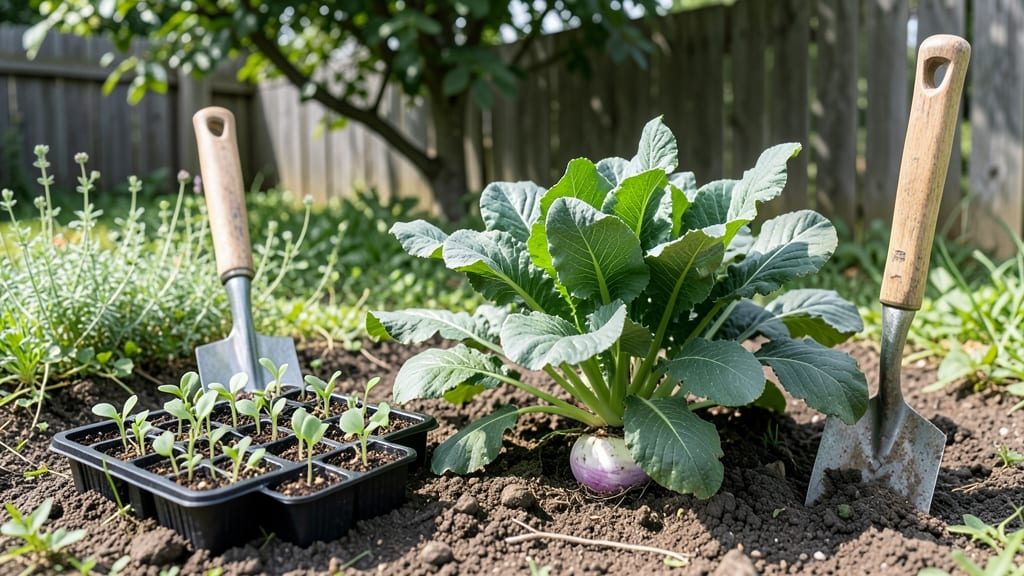
Plant turnip greens in Tennessee between late February and early April for spring harvests, or August through early September for fall crops—timing that avoids both early frosts and summer’s brutal heat.
You’ve probably noticed how Tennessee’s climate shifts from the cool Appalachian highlands to the humid Delta lowlands—a difference that can mean the gap between a thriving crop and a bolted mess.
The key? Planting 4–6 weeks before your last frost (usually mid-April in most zones) and using heat-tolerant varieties for late-summer sowings.
Turnip greens 🥬 thrive as a cool-season crop, but they’re tough enough to handle Tennessee’s 6a–7b zones with the right prep. Well-draining soil, a pH of 6.0–7.0, and consistent moisture keep them growing through May and October harvests—even in the state’s clay-heavy soils.
Below, I’ll break down the exact frost-free deadlines by region, soil prep secrets, and how to stagger plantings for a continuous harvest—no more wasted seeds or bitter greens. Let’s get those turnips in the ground the right way.
Tennessee turnip greens planting calendar by region: frost dates & ideal windows
Turnip greens thrive in Tennessee’s cool-season windows, but your exact planting timeline depends on whether you’re in the cool Appalachian Mountains, warm Middle Tennessee valleys, or hot West Tennessee Delta.
Each region has distinct frost dates and heat tolerances that dictate when to sow seeds for the best harvest. Let’s break down the ideal planting windows so you can time your crop perfectly.
Turnip greens are a cool-season crop, meaning they grow best when soil temperatures stay below 75°F. In Tennessee, this typically means planting in early spring (March–April) or late summer (August–September) for a fall harvest.
However, West Tennessee’s heat can push your last planting window earlier, while East Tennessee’s cooler climate allows for later fall sowings.
To maximize your harvest, aim to plant 4–6 weeks before your region’s average last frost date for spring greens, or 6–8 weeks before the first frost for fall greens.
Heat-tolerant varieties like ‘Seven Top’ or ‘Purple Top White Globe’ can extend your growing season in warmer areas, but even these struggle if planted too late in West Tennessee’s sweltering summers.
In East Tennessee’s cooler climate, you can push your fall planting later than other regions. The Appalachian Mountains’ higher elevations (USDA Zone 6b) delay frost until mid-October, giving you time to sow seeds as late as September 15.
Varieties like ‘Tokyo Cross’ handle the cooler nights well and produce sweet, tender greens even in shorter growing seasons.
For Middle Tennessee’s valleys, where temperatures rise faster in spring, start seeds indoors in late February and transplant outdoors by mid-March. The Nashville area’s USDA Zone 7a allows for a slightly longer fall window, but heat waves in August can stress seedlings.
Opt for shade cloth if planting in late summer to protect young plants from wilting.
West Tennessee’s hot, humid Delta climate (Zone 7b–8a) demands early action. Plant your last spring crop by March 10 to avoid bolting—when turnip greens prematurely flower and become bitter. For fall, focus on July 15–August 1 sowings, using heat-tolerant varieties like
Step-by-Step planting guide: soil, spacing, and successive sowing for continuous harvests
Tennessee’s clay-heavy soils can be tricky for growing turnip greens, but with the right prep, you’ll get lush, productive plants. Start by testing your soil’s pH level—turnip greens thrive in a range of 6.0 to 7.0.
If your soil is too acidic, amend it with lime; if it’s alkaline, add sulfur or peat moss. Clay soils also benefit from organic matter like compost or well-rotted manure to improve drainage.
Before planting, loosen the soil to a depth of 12 inches to help roots penetrate easily. Mix in 2-3 inches of compost to provide nutrients and improve structure.
If your soil drains poorly, consider building raised beds or planting on a slight slope to prevent waterlogging, which can stunt growth or cause rot.
Turnip greens are cool-season crops, so timing is key. For a spring harvest, sow seeds 4-6 weeks before your last frost date—typically mid-March to early April in most of Tennessee.
For fall greens, plant seeds 6-8 weeks before your first frost, usually late August to early September. This staggered approach ensures a continuous supply of fresh leaves.
Optimal spacing is crucial for healthy growth. Plant seeds ½ inch deep and 1 inch apart in rows spaced 12-18 inches apart. Thin seedlings to 4-6 inches apart once they’re 2-3 inches tall to reduce competition. Proper spacing also improves airflow, cutting down on disease risk like powdery mildew.
🌱 Step-by-Step Planting Guide for Turnip Greens in Tennessee
- 📅 Step 1: Choose Your Planting Window
- Spring: Mid-March to early April (4-6 weeks before last frost)
- Fall: Late August to early September (6-8 weeks before first frost)
- 🌿 Step 2: Prep Your Soil
- Test pH (6.0-7.0) and amend with lime or sulfur as needed
- Loosen soil to 12 inches deep and mix in 2-3 inches of compost
- 🌱 Step 3: Plant Seeds Correctly
- Sow seeds ½ inch deep and 1 inch apart
- Thin seedlings to 4-6 inches apart once they’re 2-3 inches tall
- 🌡️ Step 4: Extend the Season
- Use row covers or cold frames for early spring/late fall protection
- Plant every 2-3 weeks for continuous harvests through fall and winter
- 💧 Step 5: Water and Maintain
- Keep soil consistently moist (1 inch per week)
- Avoid overhead watering to prevent disease
To extend your harvest, practice successive sowing. Plant new seeds every 2-3 weeks from late summer into early fall. This method ensures a steady supply of greens even as temperatures drop.
For cold-hardy varieties, like ‘Purple Top White Globe’ or ‘Tokyo Cross’, you can push your planting window later into fall and still enjoy fresh greens through light frosts.
Mulch around your plants with straw or shredded leaves to retain moisture and regulate soil temperature. This is especially helpful in Tennessee’s hot summers and cool winters. If a late frost threatens, cover young plants with row covers or old blankets to protect tender leaves.
With these steps, you’ll enjoy a bountiful harvest of turnip greens from spring through winter!