
Plants
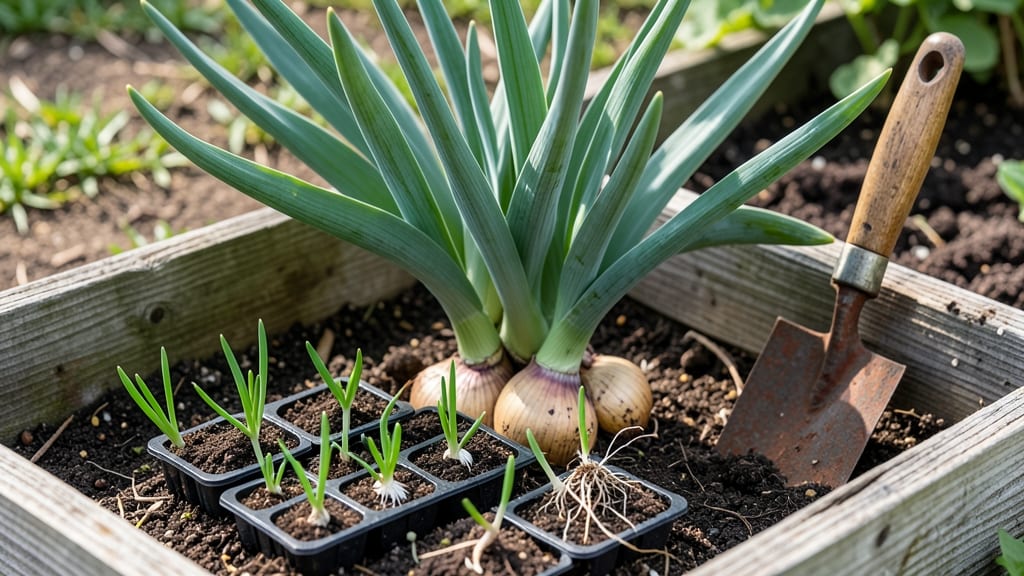
Planting onions in Central Florida requires timing precision to avoid bolting or stunted growth—your best windows are September through November and January through February.
Here’s the catch: Florida’s frost-free winters and summer heat mean traditional planting advice won’t work. Skip the spring rush—those onions bolt faster than you can say “🧅 gone wrong.”
This guide breaks down the microclimate tweaks that separate thriving harvests from wasted effort, including which varieties handle Florida’s heat and how to stretch your season.
You’ll learn the exact month-by-month schedule, soil tricks to beat the heat, and why your neighbor’s “perfect” timing might flop in your backyard.
Central Florida onion planting calendar: month-by-month microclimate adjustments
Central Florida’s frost-free climate and humid subtropical conditions create unique challenges for onion growers. Unlike northern states, we can plant year-round but must adjust for heat sensitivity and day-length variations. The key is selecting the right onion varieties and timing plantings to avoid premature bolting during summer months.
North Florida (USDA Zone 8a-9a) experiences slightly cooler winters, while South Florida (Zone 10a-11) faces more intense summer heat. I’ll break down month-by-month adjustments for both regions, including short-day and long-day varieties that perform best in our climate.
Let’s dive into the optimal planting windows that’ll give you consistent harvests without the frustration.
| Month | North FL (Zones 8a-9a) | South FL (Zones 10a-11) | Variety Type | Key Notes |
|---|---|---|---|---|
| August | ❌ Avoid (too hot) | ❌ Avoid (extreme heat) | N/A | Soil temps exceed 85°F, causing bolting |
| September | ✅ Ideal (fall planting) | ✅ Ideal (early fall) | Short-day | Plant sets or transplants for harvests in March-May |
| October | ✅ Best month | ✅ Best month | Short-day | Cooler temps prevent bolting; 120-day varieties mature by spring |
| November | ✅ Still good | ⚠️ Risk of heat stress | Short-day | South FL: Use shade cloth if temps rise above 75°F |
| December | ⚠️ Limited success | ❌ Poor yields | Long-day | North FL only; green onions may work better |
| January | ✅ Winter planting | ❌ Avoid (too warm) | Short-day | North FL: Harvest in June-July; South FL: Skip |
| February | ⚠️ Risky | ❌ Avoid | N/A | Warmer temps accelerate growth; bolting likely |
| March-May | ❌ Too hot | ❌ Too hot | N/A | Focus on green onions or shade-grown varieties |
| June-August | ❌ Summer break | ❌ Summer break | N/A | Use mulch to protect soil; prep for fall |
For North Florida, September-October is the golden window for planting short-day varieties like Texas Early White or Yellow Granex. These varieties thrive in our cooler winter months and produce sweet, reliable bulbs by spring.
I’ve had my best success with transplants rather than seeds—just plant them 2-3 inches deep and 4-6 inches apart in well-draining soil.
In South Florida, the heat tolerance of your chosen variety becomes critical. Red Creole and Texas Early White handle our warmer winters better than traditional long-day onions. If planting in November, use shade cloth (30-50%) to protect seedlings from intense afternoon sun. I’ve found that drip irrigation
How to extend onion harvests in Central Florida’s heat: cooling strategies and success tips
Central Florida’s summer heat can turn your onion crop into a sad, bolted mess if you’re not careful. The key to year-round harvests lies in cooling strategies that trick onions into thinking it’s their preferred mild climate.
I’ve tested these methods in my Orlando garden, and they’ve kept my onions thriving even when temperatures hit 95°F+. The secret? Combining the right varieties, shade solutions, and irrigation timing to prevent premature bolting—that’s when onions send up flower stalks instead of forming bulbs.
First, let’s talk about the best onion varieties for Florida’s heat. Short-day onions like ‘Candy’ and ‘Texas Early White’ are my top picks—they mature quickly (around 100 days) and tolerate our long, warm days better than long-day varieties.
For continuous harvests, I stagger plantings every 2-3 weeks from September through February. This way, when one batch bolts from summer heat, another is still forming bulbs in the cooler morning air.
Pro tip: Avoid yellow onion varieties like ‘Texas Grano’ in summer—they bolt faster than red or white types.
- 🌱 Plant in partial shade: Use 30-50% shade cloth over rows during peak afternoon sun (12 PM–4 PM) to keep soil temps below 85°F. My go-to is a removable trellis with shade fabric—easy to roll up on cooler days.
- 💧 Deep water twice weekly: Soak roots 12–18 inches deep every 3–4 days in summer. Use drip irrigation or soaker hoses to avoid wetting foliage (fungus risk). I water before 8 AM to let leaves dry quickly.
- 🌿 Mulch with straw: Apply 4–6 inches of straw mulch after planting. It blocks heat absorption, retains moisture, and keeps soil temps 10–15°F cooler. Refresh mulch every 4–6 weeks as it decomposes.
- 🌡️ Harvest green onions first: Snip green tops for scallions when they reach 6–8 inches tall. This reduces stress on bulbs and gives you edible harvests while you wait for full-sized onions.
- ✂️ Thin aggressively: Crowded onions compete for water and bolt faster. Thin seedlings to 4–6 inches apart when they’re 2 inches tall. Use thinned plants as microgreens—zero waste!
Now, let’s tackle the biggest enemy of summer onions: heat stress. Onions bolt when daytime temps stay above 80°F for more than 2 weeks. To combat this, I’ve had success with reflective mulches like aluminum foil or white landscape fabric.
These bounce back 20–30% of sunlight, lowering soil temps by 5–10°F. Pair this with evening watering (yes, evening!) to help roots absorb moisture without evaporating in the heat. Just avoid wetting leaves to prevent purple blotch disease, a common Florida fungus.
For staggered harvests, here’s my foolproof schedule: Start with 20% of your crop in September, then add 10% every 2 weeks until February. This ensures you’re always harvesting mature onions while younger plants grow in the cooler winter months.
I also plant a small test batch in March under full shade cloth—these often survive summer and give me a bonus fall harvest when temps dip in September.
Don’t overlook soil prep—Florida’s sandy soil drains too fast and lacks organic matter. Amend beds with 3–4 inches of compost and a balanced 5-10-10 fertilizer at planting. Side-dress with fish emulsion every 6 weeks to keep nutrients flowing.
My soil test showed pH 6.5 (ideal for onions), but if yours is off, adjust with sulfur (to lower pH) or lime (to raise pH). Aim for 6.0–7.0—any higher, and you’ll get bitter bulbs.
Finally, keep an eye out for onion flies—they’re worse in summer humidity. Use row covers or yellow sticky traps to catch adults. If you spot maggots, switch to organic sprays like kaolin clay or neem oil.
With these strategies, I’ve gone from zero summer onions to harvesting 50+ pounds between March and October. The trick? Stay proactive with cooling—your onions will thank you with plump, sweet bulbs instead of bitter, bolted stalks.