
Plants
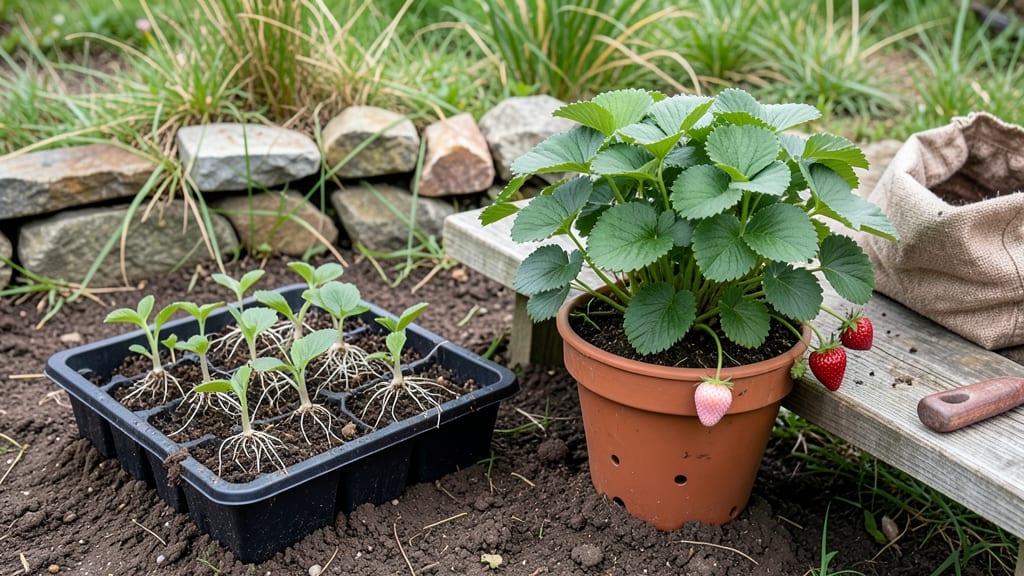
To plant strawberries in the fall, aim for 4-6 weeks before your first frost—this timing lets roots establish before winter, setting you up for a bountiful harvest next summer.
Fall-planted strawberries 🍓 actually outperform spring starts because cooler temperatures reduce pests and stress, while mulch protects tender roots. But get it wrong, and you risk weak plants or frost damage.
In Zone 6a, that window lands in late August to early September, but your exact dates depend on your local frost calendar. I’ll walk you through how to calculate yours and prep soil for success.
You’ll also learn the 5 signs your planting is on track, plus mulching and pruning tricks to keep your strawberries thriving through winter. Let’s get those berries growing!
Optimal fall planting timeline by US hardiness Zones (with frost date calculator)
Timing your strawberry planting is everything—especially in fall. Planting 6-8 weeks before your first frost gives roots time to establish before winter, while avoiding late-season planting risks. Your USDA hardiness zone determines your exact window, but cooler climates (Zones 3-5) have earlier deadlines than warmer areas (Zones 8-10).
To find your first frost date, use the National Weather Service or local extension office. A simple formula: subtract 270 days from your last frost date (e.g., if frost hits November 15, plant by September 15).
For example, in Zone 6a, aim for late August to early September.
Why does timing matter? Strawberries need 4-6 weeks to develop strong root systems before winter. Plant too late, and roots won’t anchor deeply enough, leading to winter kill or poor harvests next year. Conversely, planting too early can expose young plants to heat stress or pests.
Here’s your zone-by-zone planting window for fall strawberries, including frost date calculations and ideal soil temperatures (50-65°F for best root growth).
🌱
In Zones 3-4, where winters are harsh, plant June-bearing varieties like 'Chandler' by late July at the latest. These zones have the shortest window, so avoid delays—roots need time to harden before sub-zero temperatures arrive.
Use black plastic mulch to warm soil and extend the season by 2-3 weeks.
For Zones 5-6, my favorite zone for fall planting, aim for late August. This gives plants 6-8 weeks to establish before November frosts.
Ever-bearing varieties like 'Seascape' perform well here, producing two harvests per year if planted correctly. Test soil pH (5.5-6.8) and amend with compost for best results.
Warmer Zones 7-10 offer flexibility, but don’t wait too long. Plant ever-bearing or day-neutral strawberries by mid-September to avoid winter stress.
In Zone 10, where frosts are rare, you can plant as late as early November, but protect plants with frost cloth if temperatures dip below 30°F.
Pro tip: Use a soil thermometer to confirm temperatures are above 50°F before planting. Cooler soils slow root growth, increasing frost vulnerability. If your area has unpredictable frosts, err on the earlier side—better to plant 4 weeks early than risk late-season stress.
🌿
5 Signs your fall strawberry planting timing is perfect (or too late)
Timing your fall strawberry planting correctly means the difference between robust root growth and frost-damaged plants. The ideal window is 6-8 weeks before your first frost, but how do you know if you're planting at the right moment?
Look for these 5 key signs to ensure your strawberries establish strong roots before winter.
First, check the soil temperature. Strawberries need soil that's at least 40°F (4°C) to thrive. Use a soil thermometer to confirm—if it's cooler, roots won't grow properly. This is your first clue that planting is too early. Cooler soil slows root development, leaving plants vulnerable to winter stress.
Next, observe the leaf color of your strawberry plants. Healthy leaves should be a vibrant dark green, not yellowing or wilted. Yellowing leaves signal nutrient stress or overwatering, which can weaken plants before they even hit the ground.
If leaves look dull or spotted, wait a few more weeks before planting.
Now, dig into the root system. Healthy strawberry roots should be white or light tan and 1-2 inches long. If roots are brown, mushy, or sparse, the plant isn't ready.
Well-developed roots mean the plant can establish quickly in your garden, giving it a head start for spring growth.
- ✅ Soil temp: 40°F+ – Roots grow best in warm soil. Use a thermometer to check.
- ✅ Dark green leaves – No yellowing or wilting. Healthy foliage means strong plants.
- ✅ 1-2" white roots – Well-developed roots establish faster in your garden.
- ✅ 6-8 weeks to frost – Enough time for roots to harden off before winter.
- ✅ No frost in forecast – Check the 10-day weather report for clear skies.
Another critical sign is the time until frost. Use your local first frost date as a guideline—planting 6-8 weeks before gives roots enough time to establish before winter.
If frost is closer than 4 weeks, delay planting until spring. You can check frost dates using the USDA Plant Hardiness Zone Map or local weather reports.
Finally, pay attention to the weather forecast. Clear skies and mild temperatures (above 50°F/10°C) are ideal for planting. If a cold snap is predicted within a week, wait until conditions stabilize.
Strawberries are resilient, but newly planted ones need time to adjust to their new home before facing freezing temps.
If you spot all five signs—warm soil, healthy leaves, strong roots, enough time before frost, and stable weather—you’re ready to plant! Strawberries will reward you with sweeter fruit and bigger harvests next year if you nail the timing. Happy planting! 🍓