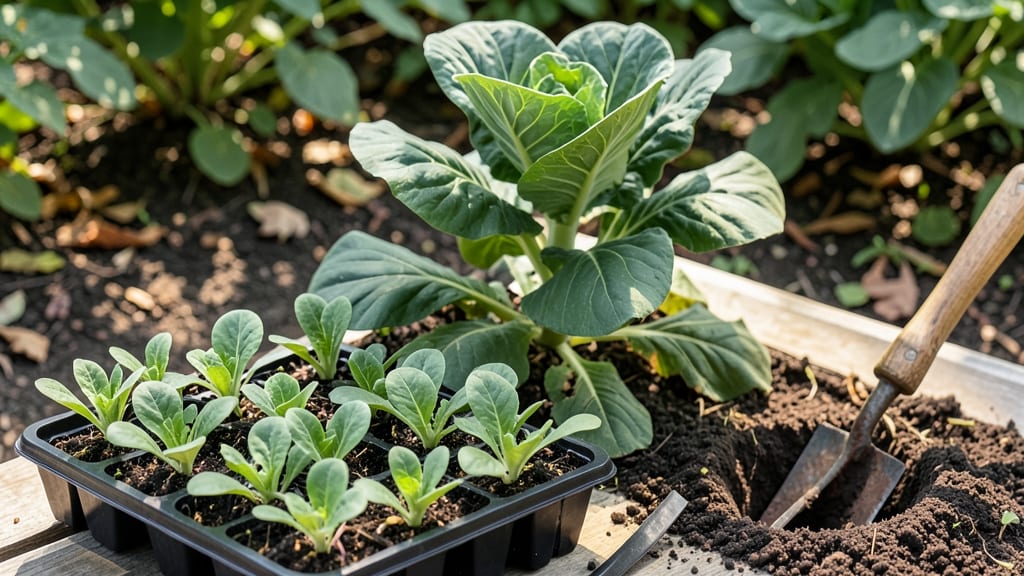
Planting collard greens in North Carolina at the right time means sweet, tender leaves all season long—whether you're in the Coastal Plain, Piedmont, or Mountains.
Collard greens thrive in North Carolina’s mild winters, but planting them at the wrong time means bitter-tasting leaves or stunted growth—so timing is everything.
Most gardeners start in early spring when soil temperatures hit 50°F, but the real secret is knowing when to plant for fall harvests too. The key is avoiding late frosts while giving plants enough time to mature before winter.
Below, I break down the best planting windows by region, how to extend your harvest with succession planting, and the simple soil checks that tell you it’s time to get those seeds in the ground.
Jan
❄️
Feb
❄️
Mar
🌱
Apr
🌱
May
🌱
Jun
🌱
Jul
☀️
Aug
☀️
Sep
🍂
Oct
🍂
Nov
🍂
Dec
❄️
North Carolina collard green planting calendar by microclimate Zone
North Carolina’s diverse geography means your collard greens planting timeline should change based on whether you’re in the Coastal Plain, Piedmont, or Mountain regions. Coastal areas enjoy milder winters, while Mountain zones face earlier frosts—so knowing your USDA hardiness zone and first/last frost dates is critical.
For example, Zone 7b (Coastal) has 150 frost-free days, while Zone 6b (Mountains) only has 120 days.
Collard greens are cool-season crops that thrive when temperatures hover between 60°F and 75°F. Planting too early in cold soil or too late in summer heat leads to bolting (premature flowering) or stunted growth.
The key is to align your planting with soil warmth (at least 50°F) and daylength changes, which trigger optimal growth.
Here’s how to break it down by region—plus the best succession planting windows to maximize your harvest. Whether you’re aiming for a fall crop, winter harvest, or early spring greens, this calendar keeps your collards productive year-round.
🌱
| Region |
USDA Zone |
First Frost |
Last Frost |
Best Planting Windows |
Soil Temp Requirement |
Harvest Window |
| Coastal Plain |
7b-8a |
Mid-November |
Mid-March |
- Spring: March 15–April 15
- Fall: July 1–August 15
- Winter: September 15–October 30 (cold-hardy varieties)
|
≥50°F |
- Spring: May–June
- Fall: October–November
- Winter: December–February (with row covers)
|
| Piedmont |
6b-7a |
Late October |
Late March |
- Spring: April 1–May 1
- Fall: June 15–July 30
- Winter: August 15–September 15 (for overwintering)
|
≥55°F |
- Spring: June–July
- Fall: September–October
- Winter: November–March (protected)
|
| Mountain |
5b-6a |
Early October |
Early April |
- Spring: May 1–May 15
- Fall: June 1–June 15 (early start)
- Winter: July 15–August 1 (for late harvest)
|
≥60°F |
- Spring: July–August
- Fall: September–October
- Winter: October–February (with heavy mulch)
How to extend your collard green harvest with succession planting
North Carolina’s mild winters and long growing season make collard greens a perfect candidate for succession planting. By staggering your plantings, you can enjoy fresh leaves from fall through early spring—even when frost threatens.
The key is choosing the right varieties and timing each planting to avoid bitter flavors or stunted growth.
I’ve found that cold-hardy varieties like ‘Georgia Southern’ and ‘Vates’ handle frost better than others, while row covers can push harvests even later.
For example, a fall planting in September might yield tender greens until December, while a winter planting in January can produce harvests by April—just before summer heat sets in.
🌱 Succession Planting Timeline for NC Collards
- Early Fall (Aug–Sept): Plant for fall/winter harvest. Use row covers after frost.
- Late Fall (Oct–Nov): Harden off plants for winter survival. Mulch heavily.
- Early Spring (Feb–March): Plant for spring harvest before summer heat arrives.
- Late Spring (April–May): Succession sow for summer greens in cooler mountain zones.
For fall plantings, aim for 6–8 weeks before first frost (typically mid-October in the Piedmont or early November along the coast). Use transplants instead of seeds—they establish faster and tolerate cooler soil. Space plants 12–18 inches apart to allow air circulation and reduce disease risk.
Winter plantings require extra protection. After sowing in January or February, cover young plants with floating row covers during hard freezes (28°F or lower).
I’ve seen ‘Top Bunch’ collards survive 20°F nights with just a lightweight fabric—no plastic needed. Always remove covers during the day to prevent heat stress.
In early spring, focus on soil warming before planting. Test soil temperature with a thermometer—collards thrive when it’s 50°F or above. If your soil is still cold, use black plastic mulch for 2–3 weeks to speed up germination.
For mountain regions, wait until mid-April to avoid late frosts.
Don’t forget to harvest strategically to encourage regrowth. Pinch off outer leaves first, leaving the inner growth point intact. This method keeps plants producing for months longer than a single harvest. With these techniques, I’ve extended my collard harvest by 6–8 weeks beyond the typical season—and so can you!
★★★★★5.0(9 reviews)
|