
Plants
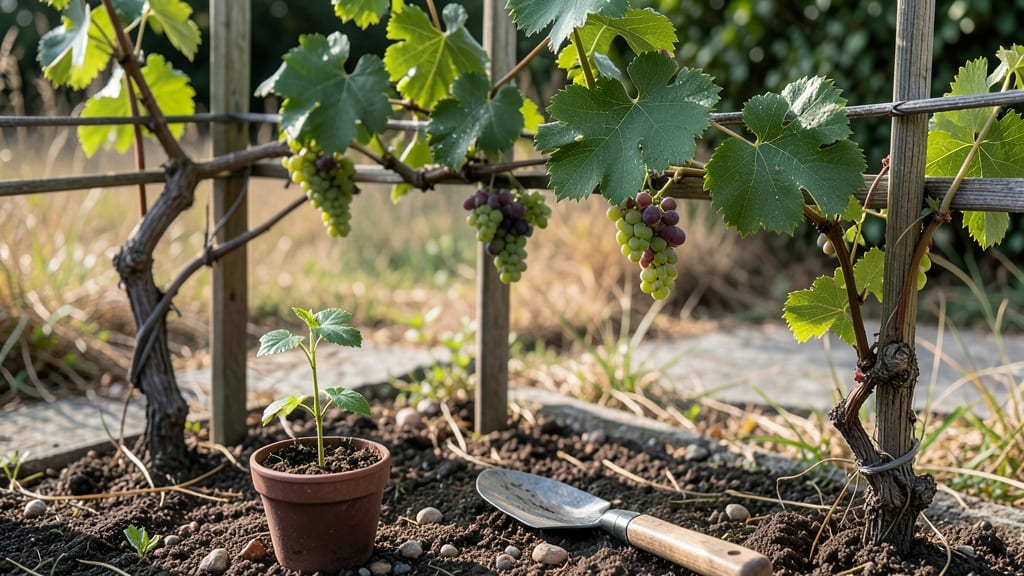
Planting grape vines in Texas requires timing them just right—late winter through early spring or fall—to avoid heat stress and ensure strong root growth before the hottest months.
Texas gardeners know timing is everything—plant grape vines too early, and they’ll struggle with heat stress; too late, and they won’t establish roots before winter. Mastering the perfect window ensures your 🍇 vines thrive year-round.
For North Texas (Zones 8a-8b), aim for late February to early March, while Central Texas (Zones 9a-9b) can start as early as January. In South Texas (Zones 10a-10b), fall planting in September or October works best, avoiding summer’s brutal heat.
Below, I break down the best planting months by region, soil prep tips, and how to adjust for container vs. in-ground planting—so your grape vines get off to the strongest start possible.
Optimal planting months for Texas grape vines by region (north vs. central vs. south)
Texas spans three distinct grape-growing regions, each with unique frost patterns and heat intensity. North Texas (Zones 7a-8a) faces harsh winters with late frosts, while Central Texas (Zones 8a-9a) enjoys mild winters and scorching summers. South Texas (Zones 9b-10a) has near-tropical conditions with minimal frost risk.
These differences mean your planting window must align with your region's last frost date and summer heat tolerance.
For North Texas gardeners, the ideal planting window is February through March for bare-root vines or September to October for container-grown plants.
This timing ensures roots establish before summer heat peaks. Central Texas can extend planting to late March or early November, while South Texas enjoys a longer window from September through November, avoiding the brutal summer heat.
Here’s the key difference: North Texas must rush to beat frost, Central Texas balances frost and heat, and South Texas focuses on avoiding summer’s extreme heat. Muscadine grapes thrive in South Texas’s humidity, while Thompson Seedless prefers Central Texas’s cooler nights.
Your region dictates not just when to plant, but which varieties will succeed.
🌱
In North Texas, planting after April 15 risks heat stress, while Central Texas can push to May 1 if using shade cloth. South Texas avoids planting before September to prevent summer’s 100°F+ temperatures. Bare-root vines need moist soil to wake from dormancy, so plant when soil temps hit 60–70°F—use a soil thermometer if unsure.
For container-grown vines, fall planting is ideal across all regions. Containers warm faster in spring, so North Texas can start containers in late March, while South Texas waits until October. Root establishment is critical—vines need 6–8 weeks to adapt before summer’s intensity.
Mulch with 2–3 inches of straw to retain moisture and regulate soil temperature.
🌿
If you’re in transition zones (e.g., Dallas-Fort Worth or Austin-San Antonio), check your microclimate. Urban areas may experience 2–4°F warmer temps than rural zones, shifting your deadline by 1–2 weeks.
Use a local weather station or USDA Plant Hardiness Map to pinpoint your exact zone. Muscadine grapes, for example, handle South Texas’s humidity better than European varieties, which struggle in 90%+ humidity.
Pro tip: Hardening off nursery vines for 7–10 days before planting reduces transplant shock. Gradually expose them to direct sun and wind to mimic Texas conditions. Root pruning (trimming roots by 1/3) also encourages faster establishment.
These steps are especially critical in North Texas, where cold snaps can still occur after planting.
🪴
Remember, grafted vines (common in commercial orchards) have different timing needs than own-rooted varieties. Grafted vines need extra care in North Texas to protect the graft union from winter dieback. Own-rooted Muscadines, however, thrive in South Texas’s heat with minimal intervention.
Always match your vine type to your region’s climate for best results.
Finally, soil preparation varies by region. North Texas soils are often clay-heavy, requiring amendments like compost or sand. Central Texas benefits from gypsum to break up compacted soil, while South Texas needs organic matter to improve drainage in sandy soils. Test your soil’s pH (6.0–7.0 ideal)
Critical factors that determine the best planting time for grape vines in Texas
Texas's extreme heat and variable frost dates make timing critical for grape vine success.
The ideal soil temperature of 60–70°F is your first clue—plant too early, and roots struggle in cold; too late, and summer heat stunts growth. Muscadine varieties handle heat better than Thompson Seedless, so your choice directly impacts timing.
Rainfall patterns also play a role. North Texas needs early planting to avoid summer droughts, while South Texas can extend windows due to milder winters. Container planting offers flexibility—you can delay slightly compared to in-ground vines, which need deeper soil warmth.
| Factor | Texas-Specific Consideration | Actionable Adjustment |
|---|---|---|
| Soil Temperature | 60–70°F (North TX: Feb-Mar; South TX: Jan-Feb) | Use soil thermometer; delay if <60°F |
| Rainfall Patterns | North TX: Drought risk; South TX: Humid | Mulch heavily in North TX; improve drainage in South TX |
| Variety Heat Tolerance | Muscadine: Heat-resistant; Thompson Seedless: Needs shade | Plant Muscadine in full sun; Thompson Seedless near trellis |
| Container vs. In-Ground | Containers heat up faster; in-ground stays cooler | Delay container planting by 2–3 weeks |
For container-grown vines, adjust timing by 2–3 weeks later than in-ground. Containers heat up faster, so aim for late March in North Texas or February in South Texas. Bare-root vines planted in fall (September–October) establish roots before winter but need winter protection.
Watch for last frost dates—North Texas (Feb 15) vs. South Texas (Jan 15). Thompson Seedless varieties need shade cloth if planted before April, while Muscadine grapes thrive in full sun year-round. Adjust watering immediately after planting to encourage root growth in 60–70°F soil.
Pro tip: Test soil moisture before planting—dry soil in North Texas means deeper watering, while South Texas humidity may require drainage improvements. Mulch with wood chips to retain moisture and regulate soil temperature.
Remember, fall planting (September–October) gives vines time to establish before winter, while spring planting (February–March) avoids summer heat stress. Monitor soil temps weekly—this is your best tool for perfect timing! 🌱