
Plants
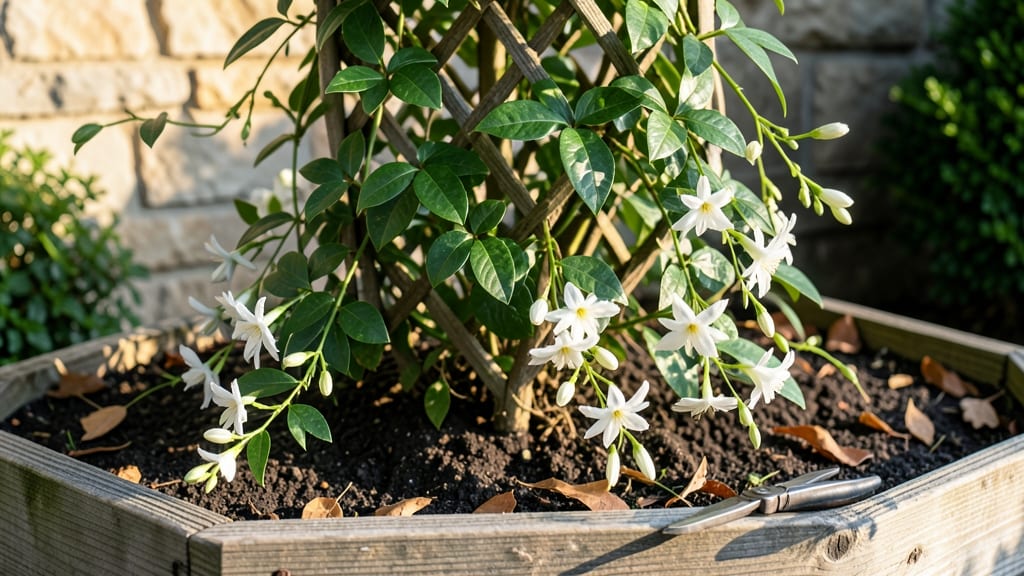
Wondering how tall do jasmine plants grow, you’ll find they range from 3 feet to towering 30 feet, depending on the variety and how you train them.
Picture this: one year, my jasmine 🌸 crept along the fence like a shy guest, barely reaching my waist. The next, it had claimed the entire trellis, draping fragrant vines over the porch roof. That’s the magic—and the challenge—of growing jasmine.
Climbing varieties like Jasminum officinale can scale walls or pergolas, while trailing types spill over containers like a living waterfall. The key to managing their height? Pruning, support structures, and knowing which variety fits your space.
In this guide, I’ll break down the height ranges for different jasmine types, share my best tips for controlling growth, and help you pick the perfect variety for your garden—whether you want a compact bush or a sky-high vine.


Jasmine plant height variations: climbing vs trailing growth habits
If you're dreaming of a fragrant jasmine vine wrapping around your porch or cascading from a hanging basket, you're in for a treat—but first, let's clarify the height differences between climbing and trailing varieties.
Some jasmine plants grow like aggressive vines, while others stay compact or sprawl horizontally. The key difference lies in their natural growth habits and how they interact with support structures.
Climbing jasmine varieties, like Jasminum officinale (common jasmine), can reach heights of 10-30 feet when given proper support, while trailing types like Jasminum polyanthum (winter jasmine) typically max out around 8-10 feet but spread horizontally.
Your choice of variety will determine whether you need a trellis, arbor, or ground cover to manage its growth.
| Variety | Growth Type | Mature Height | Growth Rate | Ideal Support |
|---|---|---|---|---|
| Jasminum officinale | Climbing | 10-30 ft | Fast (3-6 ft/year) | Trellis, arbor, fence |
| Jasminum polyanthum | Trailing | 3-8 ft | Moderate (2-4 ft/year) | Hanging basket, ground cover |
| Jasminum sambac | Bushy/Trailing | 3-6 ft | Slow (1-2 ft/year) | Container, small trellis |
| Jasminum nudiflorum | Climbing | 8-12 ft | Moderate (2-3 ft/year) | Arbor, pergola |
The Jasminum officinale, also known as common jasmine, is the ultimate climber and can easily overtake a 10-foot trellis in just one growing season. This variety thrives when trained to climb, producing fragrant white flowers that perfume your garden from late spring through summer.
Without support, it may sprawl, but it will still reach impressive heights.
On the other hand, Jasminum polyanthum, or winter jasmine, is a trailing beauty that spreads horizontally rather than vertically. It’s perfect for hanging baskets or ground cover, where it can cascade gracefully.
Its yellow flowers bloom in winter, making it a standout for late-season color. If left unchecked, it can spread 8-10 feet wide, so pruning is key to maintaining its shape.
For smaller spaces, consider Jasminum sambac, also called Arabian jasmine, which stays compact at 3-6 feet tall but produces an intoxicating fragrance. This variety is ideal for containers or small trellises and is often grown as a bushy shrub.
Its slow growth rate makes it low-maintenance, perfect for beginners or urban gardeners with limited space.
If you're aiming for a winter-flowering jasmine, Jasminum nudiflorum is a fantastic choice. This variety climbs to 8-12 feet and blooms bright yellow flowers from late winter through early spring, adding a splash of color when most gardens are dormant.
It’s less aggressive than Jasminum officinale but still benefits from a sturdy arbor or pergola for support.
When planning your garden, consider the growth rate of each variety. Fast-growing climbers like Jasminum officinale may require annual pruning to control their height, while slower-growing types like Jasminum sambac need less frequent maintenance.
Always choose a support structure that matches the mature height of your jasmine to ensure it thrives without becoming unruly.
Pro tip: If you're growing jasmine in containers, opt for trailing or dwarf varieties like Jasminum polyanthum or Jasminum sambac. These will stay within 3-6 feet of your balcony or patio, making them perfect for small spaces.
Just ensure your container has drainage holes and is large enough to accommodate the plant’s root system as it grows.
Regardless of the variety, all jasmine plants benefit from regular pruning
How to control jasmine plant height for small gardens or containers
If your jasmine plant is growing taller than your balcony railing or sprawling beyond your container edges, don’t worry—there are simple ways to manage its height. Jasmine plants thrive in small spaces when given the right pruning techniques and growth training.
Whether you’re dealing with a climbing variety like Jasminum officinale or a trailing type like Jasminum polyanthum, controlling its size starts with understanding its natural growth habits and adjusting care accordingly.
For container-grown jasmine, the key is regular pruning and root management. If your plant is root-bound, it will focus energy on height rather than bushiness. Repotting every 2-3 years and trimming roots can redirect growth downward.
For climbing varieties, use trellises or cages to guide vines upward, preventing them from stretching uncontrollably. Trailing types, on the other hand, benefit from pinching back tips to encourage branching.
- 🌿 Prune in late winter (before new growth) to shape climbing jasmine and remove overlong vines.
- ✂️ Pinch trailing jasmine tips every 6-8 weeks to promote bushier growth and prevent legginess.
- 🪴 Repot root-bound plants in spring using a 1-2 inch larger pot to encourage downward growth.
- ☀️ Provide partial shade (4-6 hours of sun) to slow rapid vertical growth in hot climates.
- 💧 Water deeply but less frequently to prevent overgrowth—jasmine responds to stress by flowering more.
Seasonal trimming is another game-changer. In late winter or early spring, cut back one-third of the plant’s height to encourage fresh, compact growth. For trailing varieties, trim longest stems to redirect energy into side branches.
This not only controls height but also boosts flower production. Avoid heavy pruning in fall or winter, as jasmine needs time to recover before spring growth.
If your jasmine is in a container, check for root circling—a common issue that stunts growth. Gently loosen roots when repotting and trim any that wrap around the root ball. Add a slow-release fertilizer to encourage healthier, more controlled growth.
For climbing types, install a support structure early to prevent vines from stretching toward the ground, which can make them harder to train later.
Encouraging bushier growth in trailing varieties is all about light and pruning balance. Place your container where it gets morning sun and afternoon shade—this prevents leggy growth while keeping flowers vibrant. Every 4-6 weeks, pinch off the top set of leaves on new growth to stimulate branching.
This method works wonders for varieties like Jasminum sambac, which naturally trails but can become unruly without guidance.
Remember, jasmine plants are resilient, and even if you’ve let one get too tall, you can always prune it back and start fresh. With the right techniques, your jasmine will thrive in even the smallest spaces—whether it’s a balcony container or a window box.
The key is consistency in pruning, proper support, and a little patience to see your plant flourish at the perfect height for your space. 🌸